
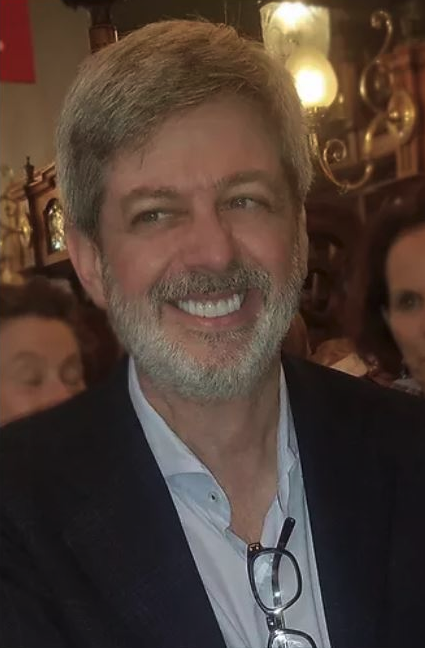
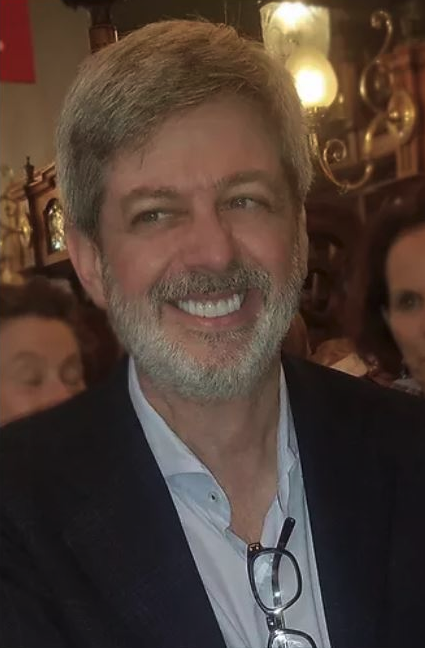
Bruce Reis, Ph.D., FIPA, IPTAR
3 optional CE credits offered
In-person and Zoom
Enrollment closes Friday, November 13
General - In-Person
Early-Bird (by Oct 24) ........... $110.00
Regular (after Oct 24) ........... $125.00
General - Zoom
Early-Bird (by Oct 24) ........... $110.00
Regular (after Oct 24) ........... $125.00
LAISPS Student Society
In-Person .................................$50.00
Zoom ……...................................$50.00
Student/Trainee
In-Person …………….................. $80.00
Zoom ……………………................ $80.00
International
Zoom ...................................... $55.00
3 optional CE credits offered.
A Morning with Bruce Reis, Ph.D., FIPA, IPTAR
Two Papers:
“What is Meant by the Term Interpretation"
And
“Milner's Foundational Influence on Bion's Reverie and Winnicott's Play”
Led by Bruce Reis, Ph.D., FIPA, IPTAR
Join us for a morning of conversation with Dr. Bruce Reis, psychoanalyst, and author of Creative Repetition and Intersubjectivity, and co-editor of Heterosexual Masculinities. The first paper will discuss the evolving role of interpretation in contemporary psychoanalytic practice. Analysts seem spellbound by language when it comes to the word interpretation, a word so idealized and grand, so laden with fantasy, that the term itself continues to hold a magical sense that defies us to think about it. Called upon to do far too much explanatory work in psychoanalysis, it is accorded a variety of meanings. It is employed for varied uses, often simultaneously, making it hard to know what analysts mean when referring to “interpretation” and what uses they intend for it. Approaches to interpretation may be heuristically separated into those having to do with the content of the unconscious and those attempting to “use” interpretation in a manner still not divorced from content. What it means to attempt to interpret what is by definition uninterpretable is yet another area to be explored. Accordingly, issues of construction, co-construction, and transformation are examined. Every interpretation is at once a concealment, every inscription a negation, every representation a re-presentation of something unrepresentable. Despite this, the concept of interpretation, even if theoretically unsupportable in large measure, retains its clinical utility.
After a discussion and a short break, we will address the overlooked role of Marion Milner in the development of imporant psychoanalytic concepts associated with Bion and Winnicott. Bruce Reis argues that Marion Milner occupies a foundational position in the development of two central concepts in contemporary psychoanalysis: Wilfred Bion's conception of reverie and Donald Winnicott's understanding of play. Milner was the originating theorist whose innovations established the conceptual ground upon which both Bion and Winnicott built their most celebrated contributions. Milner introduced "reverie" into psychoanalytic discourse before Bion, deploying it to describe states of creative absorption within a protected analytic frame – a formulation Bion would later refine and claim as his own. Milner's theorisation of absent-mindedness, bodily awareness, and the dedifferentiation of "me" and "not-me" boundaries provided the essential scaffolding for both Bion's reverie technique and Winnicott's conception of play... Recovering Milner's priority transforms our understanding of reverie and play not as competing frameworks but as two tributaries flowing from a common source.
We will offer an online study group for those who have registered for the workshop on Thursday, November 12, from 7-9pm with Tom Helscher to discuss “What is Meant by the Term Interpretation, and What is it For?"
About the Presenter
Bruce Reis, Ph.D., FIPA, IPTAR, is a Training and Supervising Analyst and Faculty Member at the Institute for Psychoanalytic Training and Research, New York; an Adjunct Clinical Assistant Professor in the New York University Postdoctoral Program in Psychotherapy and Psychoanalysis; and a member of the Boston Change Process Study Group. Dr. Reis is Regional North American Editor for the International Journal of Psychoanalysis as well as its North American book review editor. He has previously served on the editorial boards of The Psychoanalytic Quarterly and Psychoanalytic Dialogues. He is the author of Creative Repetition and Intersubjectivity (Routledge, 2020) and co-editor (with Robert Grossmark) of Heterosexual Masculinities (Routledge, 2009).
Details
To ensure a place and to attend the study group on November 12, early enrollment is advised.
Enrollment closes November 13.
Questions?
Please contact Martha Murillo at martha@laisps.org or 310-440-0333
Course Objectives
Upon completion of this activity, participants should be able to:
Identify the biographical and intellectual origins of Marion Milner's concept of "reverie," including her borrowing of the term from industrial psychologist Elton Mayo.
Differentiate epistemic claims about unconscious content from clinical claims about an interpretation’s effectiveness, developmental function, or process effects.
Describe at least three specific textual instances in which Winnicott explicitly credited Milner's influence on his conception of play, omnipotence, and illusion.
Compare and contrast how Milner, Bion, and Winnicott each theorized regression, "non-purposive" states, and the dedifferentiation of self/other boundaries in service of creativity.
Evaluate how evocative, actional, and affective interpretations may function apart from—or in excess of—explicit semantic content.
Apply Milner's concept of the "framed gap" and protective environment to a discussion of technique in contemporary clinical listening and reverie-based work.
Schedule
8:30 - 9:00 Registration and coffee
9:00 - 9:15 Introduction
9:15 - 10:30 Interpretation
Coffee break
10:40 - 11:15 Discussion
11:15 - 12:00 Milner, Winnicott, and Bion
CE Credit Information
All planners, faculty, staff, and others involved in this activity have reported no relevant financial relationships with companies whose primary business is producing, marketing, selling, re-selling, or distributing healthcare products used by or on patients. This activity has not received any commercial support.
Accreditation Statements:
Psychologists: LAISPS is approved by the American Psychological Association to sponsor continuing education for psychologists. LAISPS maintains responsibility for this program and its content.
Board of Behavioral Sciences: The California Board of Behavioral Sciences accepts APA-approved courses for Continuing Education for LCSW, LMFT, LPCC, and LEP licenses.
Psychiatrists: CME credit will not be offered for this program.
To Earn Credit:
Participants must complete an online evaluation within 2 weeks of completing this CE activity to receive credit.
Attention Psychologists:
Psychologists can earn a maximum of 3 CE credits for this program. Partial credit may not be awarded, based on APA guidelines.
*Clinicians with any other licenses should check with their Licensing Boards to ensure that APA-sponsored programs are accepted for CE credit.
Refunds/Cancellations: Refunds, less a $10 administrative fee, will be made if cancellation notification is phoned or postmarked three (3) business days in advance of this program. There will be no refunds on requests received after the refund deadline. Full refunds are made in the event that LAISPS must cancel this program.
Returned Checks: A $35.00 service charge will be assessed for checks returned by the bank.
Confidentiality: By registering for this educational event, attendees agree to strictly maintain confidentiality of any clinical material shared and will not distribute or convey such confidential material outside of the workshop.